
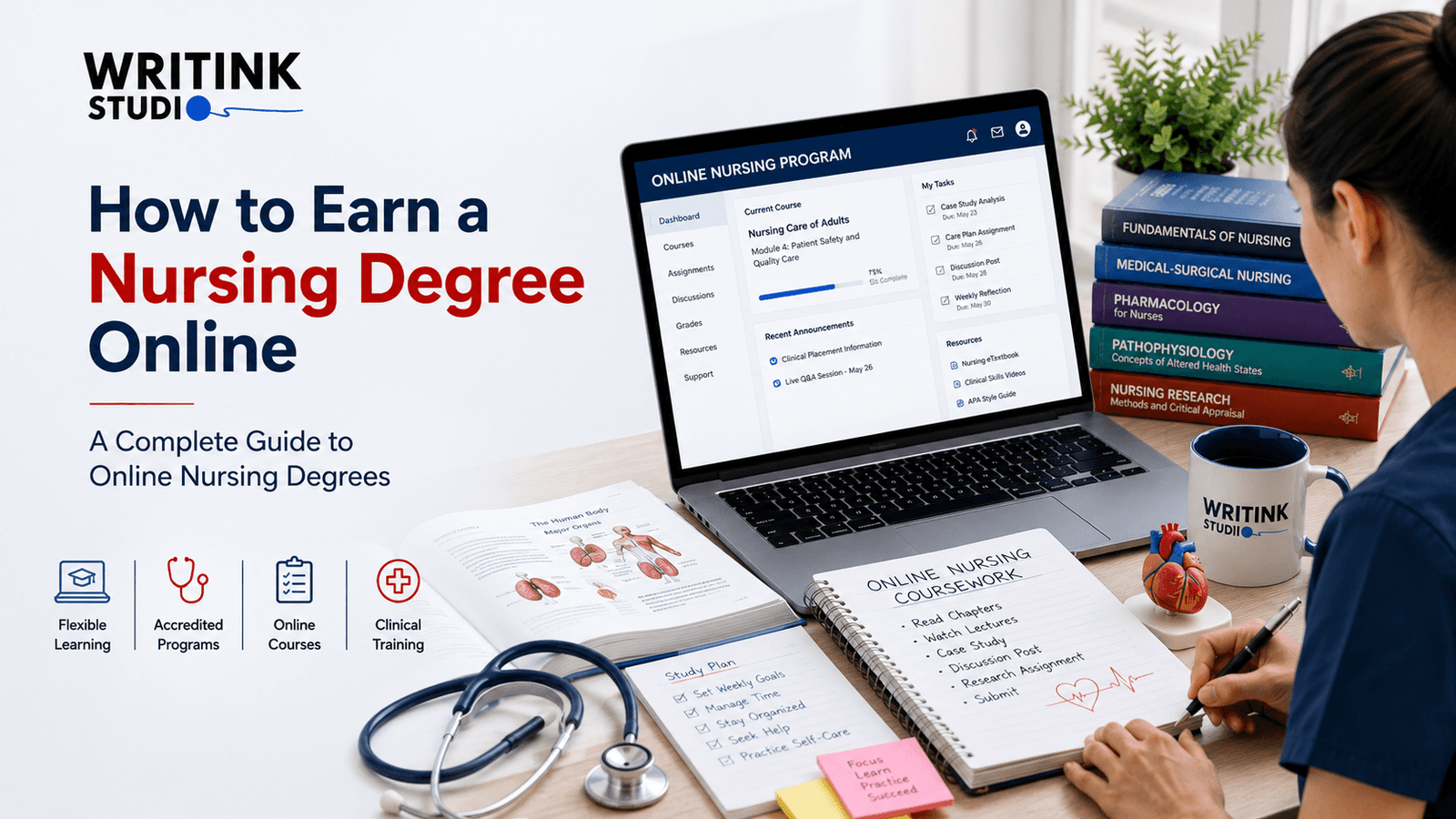
How to Earn a Nursing Degree Online: Ultimate Guide
To earn a nursing degree online, you gain flexibility for students and working professionals who need greater balance. It lets you pursue coursework remotely while balancing work, family, and other responsibilities. This option suits busy schedules and supports diverse learning needs.
However, you should note several considerations before enrolling. You must understand program requirements, clinical experiences, accreditation, coursework, and licensing considerations before enrolling.
If you are considering an RN-to-BSN program, a graduate nursing degree, or another professional degree, understand how online education works.
This knowledge helps you make a better decision.
Can You Earn a Nursing Degree Online?
Yes, many nursing programs offer courses through online or hybrid formats. However, “online” does not necessarily mean that every part of a nursing degree can be completed from home.
Nursing education combines academic knowledge with practical and clinical preparation. According to the Alliance for Nursing Accreditation, distance-learning nursing programs are expected to maintain appropriate academic standards and provide opportunities for students to develop clinical competence.
Depending on the program, students may complete lectures, readings, discussions, research assignments, examinations, and other coursework online while completing clinical requirements through approved locations.
What Types of Nursing Degrees Can You Earn Online?
The type of online nursing degree available to you will depend on your previous education, nursing credentials, career goals, and the university you choose.
RN-to-BSN Programs
RN-to-BSN programs are designed for registered nurses who want to earn a bachelor’s degree. These programs can be particularly attractive to working nurses because many schools offer a substantial portion of the coursework online.
The American Association of Colleges of Nursing reported in 2026 that hundreds of RN-to-BSN programs were available at least partially online. Program length varies depending on the institution and the student’s previous academic work.
Master’s Nursing Degrees
Students who already hold a bachelor’s degree may consider online or hybrid master’s programs in areas such as nursing education, leadership, administration, or advanced practice.
Some programs may include clinical or preceptorship requirements, so students should carefully review the curriculum before enrolling.
Doctoral Nursing Programs
Experienced nurses may also pursue advanced degrees such as a Doctor of Nursing Practice (DNP) through online or hybrid formats. These programs can involve advanced coursework, research, projects, and clinical or practice-based requirements.
How Do Online Nursing Classes Work?
Online nursing classes can involve much more than simply watching lectures.
Students may be expected to:
- Read academic textbooks and journal articles
- Participate in online discussions
- Complete essays and research papers
- Analyze nursing case studies
- Prepare presentations
- Complete quizzes and examinations
- Conduct evidence-based research
- Submit projects and other assessments
This means strong organization and time-management skills are essential.
Some online courses are asynchronous, allowing students to complete work within specified deadlines. Others may include scheduled video sessions, group activities, or instructor meetings.
What About Clinical Requirements?
Clinical education is one of the most important considerations when choosing an online nursing program.
A legitimate online nursing program should explain how clinical learning is delivered and what responsibilities students have. Accreditation standards also emphasize the importance of appropriate clinical opportunities and academic support.
Students should therefore ask:
- Where will clinical requirements be completed?
- Does the university arrange clinical placements?
- Can clinical hours be completed near your location?
- What prerequisites are required?
- Does the program meet your state’s requirements?
These questions become particularly important for students studying across state lines.
The National Council of State Boards of Nursing notes that distance nursing programs may need to comply with requirements in the state where the student is located.
How to Choose an Online Nursing Program
Don’t choose a program simply because its website says it is online. Investigate the program carefully before applying.
1. Check Accreditation
Accreditation can provide important information about the quality and standards of a nursing program. CCNE maintains a directory of accredited baccalaureate and graduate nursing programs.
2. Review the Curriculum
Look at the actual courses you will take. Consider whether the curriculum matches your career goals and whether you have the prerequisites required.
3. Understand Clinical Requirements
Find out exactly how clinical experiences, practicums, or preceptorships work.
4. Check State Requirements
Nursing licensure is regulated at the state level. A program that works for a student in one state may have different considerations for someone studying from another state. Always verify the requirements applicable to your situation.
5. Consider Academic Support
Look at the university’s resources for tutoring, writing assistance, research, technology, advising, and other forms of student support.
How to Manage Online Nursing Coursework
One of the biggest challenges of an online nursing degree is managing coursework alongside other responsibilities.
Start by creating a weekly schedule. Instead of waiting until an assignment is almost due, divide larger projects into smaller tasks.
For example:
Monday: Review the assignment and rubric
Tuesday: Research credible sources
Wednesday: Create an outline
Thursday: Write the first draft
Friday: Edit and check citations
Weekend: Review and submit
This approach can make demanding nursing coursework much easier to manage.
What If You Struggle With Academic Writing?
Nursing students often have to write research papers, case studies, reflective assignments, evidence-based analyses, and other academic documents.
If you understand the subject but struggle with grammar, organization, citations, or clarity, professional proofreading and academic editing can help you identify weaknesses in your own work.
The goal should be to improve the quality and presentation of your work while maintaining academic integrity and following your university’s policies.
Can You Earn Other Professional Degrees Online?
Nursing is only one example. Many universities now offer online or hybrid programs in professional fields such as:
- Business
- Information technology
- Healthcare administration
- Education
- Psychology
- Public health
- Accounting
- Marketing
- Project management
The same basic principles apply: research the institution, check accreditation where relevant, understand program requirements, and make sure the format fits your schedule and career goals.
Final Thoughts
An online nursing degree can provide flexibility for students who want to advance their education without attending traditional classes every day. But flexibility does not mean the program is easy. Nursing students still need to manage demanding coursework, research, assessments, clinical requirements, and deadlines.
Before enrolling, investigate accreditation, clinical arrangements, state requirements, curriculum, costs, and student support. Once enrolled, develop a realistic study schedule and seek legitimate academic support when you need help with research, writing, editing, or understanding course requirements.
With careful planning and consistent effort, online education can provide a practical pathway toward a nursing career or another professional degree.