
Student Loan Guidance 2026: Key Changes You Should Know
Education Department student loan guidance has changed significantly in 2026, leaving many college students and borrowers wondering what their loans, repayment options, and monthly payments will look like going forward.
New federal repayment options are being introduced, the SAVE Plan is being phased out, and borrowers are being directed toward other repayment plans. At the same time, new rules are changing how some students can borrow and repay federal student loans.
If you currently have federal student loans—or plan to use federal loans to pay for college—understanding these changes can help you make better decisions about your education and finances.
Important: Student loan rules can change, and eligibility depends on your individual loan type and circumstances. Always verify your situation through official Federal Student Aid resources before making financial decisions.
What Is the Latest Education Department Student Loan Guidance?
The U.S. Department of Education has introduced several important changes to federal student loan repayment in 2026.
One of the biggest developments involves borrowers who were enrolled in the Saving on a Valuable Education (SAVE) Plan. In March 2026, the Department announced that SAVE borrowers would need to leave the plan and move into a legal federal repayment plan. Borrowers are being given a period of time to select another option, with their individual loan service providing the applicable deadline.
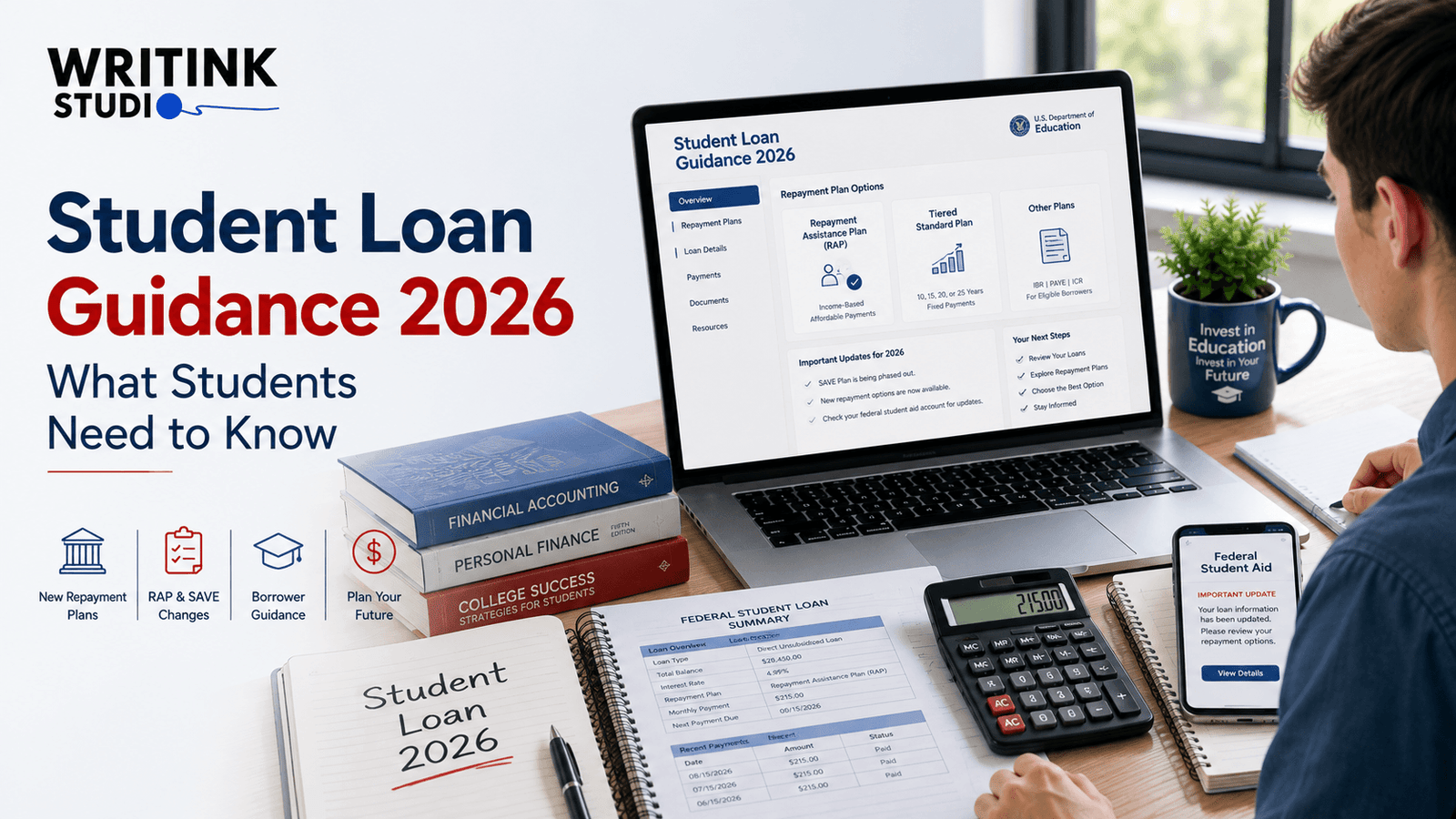
The Department is also implementing new repayment options created under federal legislation, including the Repayment Assistance Plan (RAP) and a Tiered Standard Plan.
Online Coursework / Academic Support
What Is Happening to the SAVE Plan?
The SAVE Plan has been one of the most important developments in recent student loan policy.
According to the Department of Education, borrowers enrolled in the plan are being directed to transition to another legal repayment plan. The Department stated that borrowers would receive information about available options and that servicers would communicate individual deadlines.
For students and graduates who previously relied on SAVE, this means it is important to check their current repayment status rather than assuming their previous payment arrangement will continue.
Borrowers can use their StudentAid.gov account to review their loan information and repayment details.
What Is the New Repayment Assistance Plan?
One of the major changes in student loan guidance 2026 is the introduction of the Repayment Assistance Plan, commonly called RAP.
Under RAP, monthly payments are based on factors including a borrower’s income and number of dependents. The Department says the plan is designed to provide more manageable payments while helping borrowers make progress toward reducing their loan principal.
Federal Student Aid guidance also states that borrowers whose loans were all first disbursed on or after July 1, 2026 have RAP as their available income-driven repayment plan, subject to the applicable eligibility rules. Borrowers with older loans may have different options depending on their loan types and disbursement dates.
This distinction is important because not every borrower will have the same repayment options.
What Is the New Tiered Standard Repayment Plan?
Another major change is the new Tiered Standard Plan.
According to the Department of Education, the plan provides fixed repayment terms of 10, 15, 20, or 25 years, depending on the borrower’s outstanding loan balance. Higher balances can qualify for longer repayment periods, which may reduce the required monthly payment while extending the repayment timeline.
Students and graduates should therefore look beyond the monthly payment alone. A lower monthly payment may mean paying a loan over a longer period.
Who Should Pay Attention to the 2026 Student Loan Changes?
The latest guidance is particularly relevant to:
- Current federal student loan borrowers
- College and university students using federal loans
- Graduate and professional students
- Borrowers previously enrolled in SAVE
- Graduates preparing to enter repayment
- Borrowers struggling with monthly payments
- Students planning how to finance future education
If you’re currently enrolled in college, it can also be useful to understand how borrowing decisions could affect your finances after graduation.
Also read our article about BSN Degree and its requirements
What Should Students Do Now?
The best first step is to understand exactly what type of federal student loan you have.
Federal Student Aid recommends using your StudentAid.gov account to review information such as your loan type, balance, repayment plan, and monthly payment.
1. Check your StudentAid.gov account
Don’t rely solely on old emails or information from when you first received your loan.
Check your current loan information and repayment plan directly through the official Federal Student Aid system.
2. Check messages from your loan service
If your repayment plan is changing, your loan service may send you important instructions and deadlines.
Pay particular attention to messages concerning SAVE, repayment-plan selection, or changes to your monthly payment.
3. Understand your available repayment options
Your options depend on factors such as:
- Loan type
- Original disbursement date
- Current balance
- Income
- Family size
- Repayment status
Federal Student Aid notes that eligibility for income-driven repayment plans can vary depending on loan type and when the loan was first disbursed.
4. Don’t ignore your loans
Ignoring repayment notices can create bigger problems later.
The Department has also been encouraging institutions to help delinquent and at-risk borrowers prepare for repayment options and avoid default.
If you’re struggling financially, investigate the options available to you rather than simply stopping payments.
How Could the Changes Affect College Students?
For current students, the changes are another reminder that the cost of college involves more than tuition.
Students should consider the full financial picture before borrowing, including:
- Tuition and fees
- Housing and living expenses
- Scholarships and grants
- Federal student loans
- Expected income after graduation
- Future monthly loan payments
For students choosing an online degree, the same principle applies. An online program can provide flexibility, but students should still compare tuition, financial aid, accreditation, program requirements, and expected career outcomes before enrolling.
Also read our article “How to Earn a Nursing Degree Online”
What About Graduate and Professional Students?
Graduate and professional students should pay particular attention to the changing federal loan rules.
The Department’s 2026 guidance includes changes affecting federal borrowing and repayment, and certain provisions differ depending on when loans are originated and the type of program involved. The Federal Student Aid Handbook has been updated for the 2026–27 award year to reflect various eligibility and loan-related changes.
This makes it especially important for students pursuing advanced degrees to check current federal guidance before assuming that previous loan rules will continue to apply.
Where Can Students Get Official Student Loan Information?
Because student loan policies can change quickly, students should be cautious about relying on social media posts, old articles, or unofficial loan websites.
The most reliable starting points are:
Official U.S. Department of Education student loan guidance
Federal Student Aid provides information about repayment plans, loan types, eligibility, and managing federal student loans.
Final Thoughts
The Education Department student loan guidance 2026 represents a significant shift in how many federal student borrowers will manage repayment.
The end of SAVE, the introduction of the Repayment Assistance Plan, and the new Tiered Standard Plan mean that some borrowers need to review their repayment arrangements and understand what options are available to them.
For students, the most important takeaway is simple: don’t assume your old loan terms or repayment plan will remain unchanged.
Check your StudentAid.gov account, read communications from your loan servicer, and use official federal resources to understand your options.
And if you’re balancing college coursework, online classes, or a demanding degree program alongside financial responsibilities, getting the right academic support can make managing your workload easier.
Also read article on “Online Coursework Help“
This article is intended for general educational purposes and should not be considered financial or legal advice. Student loan eligibility, repayment requirements, and available plans can vary by borrower. Always verify current information with the U.S. Department of Education or Federal Student Aid.