
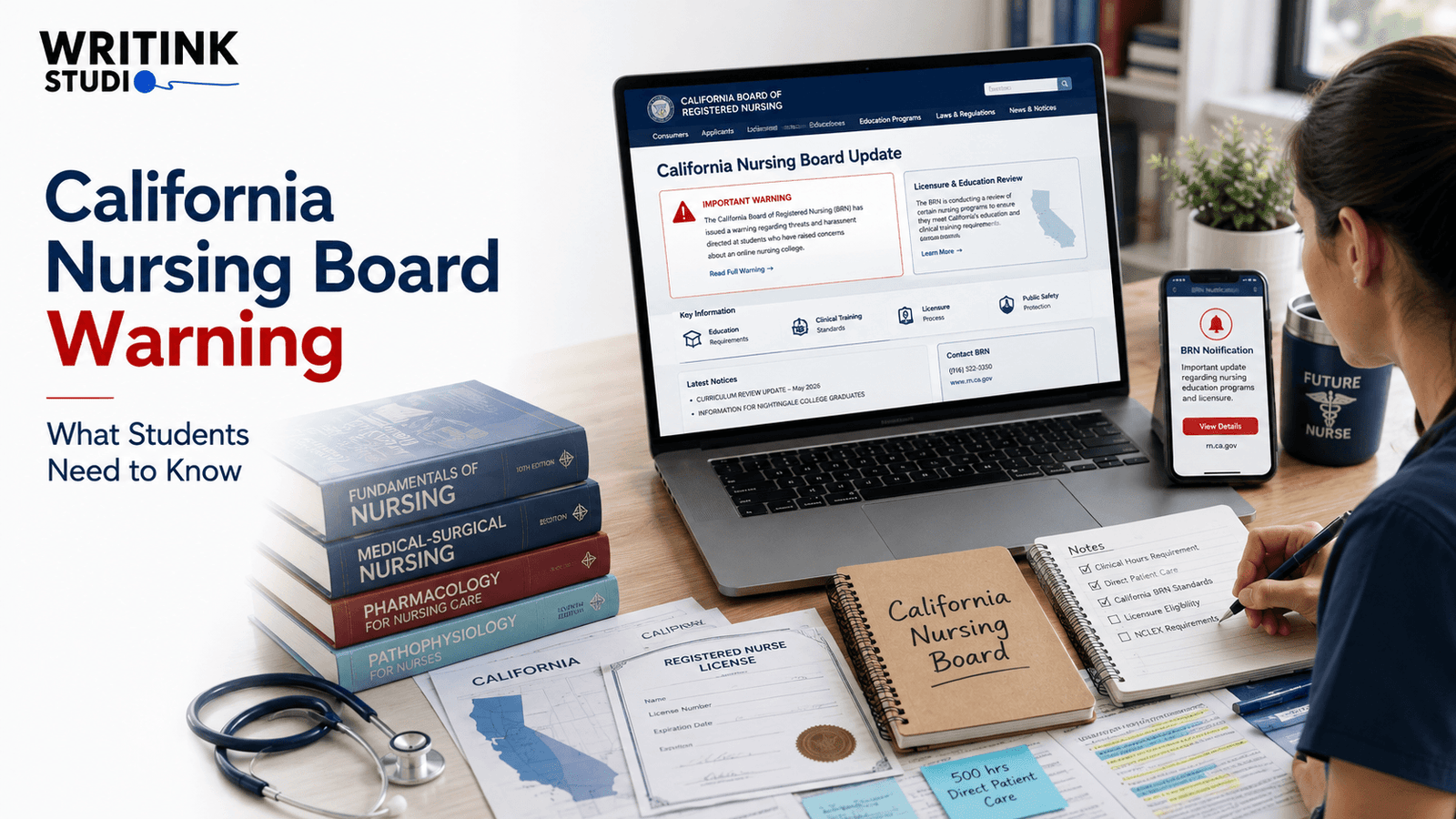
California Board of Nursing Warning: What Students Need to Know
A recent California Board of Nursing warning has drawn attention from nursing students and graduates after the California Board of Registered Nursing (BRN) addressed reports of threats and harassment directed at students who publicly raised concerns about an online nursing college. The situation is connected to an ongoing review of Nightingale College’s nursing curriculum and its California licensure implications.
For current nursing students, recent graduates, and anyone considering an online nursing program, the situation highlights an important lesson: understanding a program’s clinical requirements, licensing eligibility, and state-specific regulations is essential before investing time and money into a nursing degree.
What Is the California Board of Nursing Warning About?
The California Board of Registered Nursing recently warned against threats directed at students who had raised concerns about Nightingale College. According to recent reporting, some students said they received serious harassment and threats after speaking publicly about their experiences.
A state nursing-board attorney said that unprofessional conduct can potentially affect an applicant’s ability to obtain a nursing license or lead to restrictions on a license.
It is important to distinguish this warning from the separate regulatory issue involving Nightingale College’s curriculum. The warning does not mean that the California Board has declared the entire college invalid or fraudulent. Rather, the Board is reviewing whether the program’s instruction meets California’s requirements for nursing licensure.
Why Is the California Nursing Board Reviewing Nightingale College?
The Board’s review involves questions about whether the college’s curriculum and clinical training meet California’s requirements.
Recent reporting states that the Board has raised concerns about the required amount and nature of direct patient-care clinical training. California requires nursing applicants to meet specific education and clinical standards, and the Board has said that it is reviewing whether Nightingale’s program satisfies those requirements.
One issue involves the use of virtual-reality technology in the program.
The Board has told students that time spent using virtual reality cannot substitute for California’s required 500 hours of direct patient-care clinical training. Nightingale, meanwhile, says its VR simulations are used for skills and simulation training and has disputed the Board’s interpretation of its curriculum.
This distinction is important because simulation and direct patient care are not necessarily interchangeable requirements.
How Could the Review Affect Nursing Graduates?
The review has already affected some recent graduates who are waiting for approval to move forward with California nursing licensure.
According to reporting published earlier this month, hundreds of recent Nightingale graduates have been affected, and the number could potentially increase depending on the outcome of the Board’s review.
The California BRN has said that it cannot approve certain applications from Nightingale graduates until it verifies that the program’s courses meet California’s statutory and regulatory requirements.
For affected graduates, the uncertainty can have significant consequences. A graduate may have completed years of coursework and clinical education but still face delays before being able to proceed with the licensing process.
Also read our article on “How to Earn a Nursing Degree Online article“
What Did the California Board Say About the Threats?
The warning concerning threats is separate from the curriculum review.
Students who publicly discussed their concerns reported receiving harassment, threats, and other forms of intimidation. One former student told the Board that she and her family had been targeted after raising concerns.
The Board’s warning is therefore particularly significant for nursing students who want to raise legitimate concerns about their education.
Students should be able to ask questions about their coursework, clinical experiences, licensing eligibility, and educational requirements without being subjected to intimidation.
Nightingale College has also described the reported threats as unacceptable and said it does not tolerate harassment.
What Should Nursing Students Learn From This Situation?
The current situation offers several useful lessons for anyone considering an online nursing program.
1. Check State Licensing Requirements
Before enrolling, find out whether the program meets the nursing education requirements in the state where you intend to seek licensure.
An online program may operate nationally, but nursing licensure is regulated by individual states.
The California BRN provides information about nursing education and licensure requirements through its official website.
“California Board of Registered Nursing”
2. Understand Clinical Requirements
Don’t look only at the number of academic courses a program offers.
Ask how clinical education works, where clinical hours are completed, what specialties are included, and whether the program’s clinical experience satisfies the requirements of your state.
This is particularly important for students pursuing online nursing degrees because the academic portion of a program may be completed remotely while clinical training still requires in-person participation.
3. Research Accreditation and Authorization
Before paying tuition, verify the program’s current accreditation and authorization status.
Also check whether the nursing program is recognized by the appropriate regulatory bodies for your intended career path.
4. Keep Your Academic Records
Students should maintain copies of important academic documents, including:
- Course syllabub
- Transcripts
- Clinical-hour records
- Assignment requirements
- Clinical-placement information
- Correspondence with the university
- Graduation documentation
Keeping organized records can be useful if questions later arise about your education.
Check out our Proofreading Service
Does This Mean Online Nursing Degrees Are Unsafe?
No.
The situation should not be interpreted as evidence that online nursing education as a whole is unsafe or invalid.
Many universities offer online or hybrid nursing programs. However, nursing is a profession that combines academic education with practical clinical training. Students therefore need to understand exactly how an online program handles both components.
The better question isn’t simply:
“Is this nursing program online?”
Instead, ask:
“Does this program meet the education and licensure requirements that apply to me?”
That distinction can help students avoid expensive surprises later.
What Should Prospective Nursing Students Do?
If you’re considering an online nursing program, take time to investigate it before enrolling.
Check:
- State nursing-board requirements
- Program accreditation
- Clinical-hour requirements
- Clinical placement arrangements
- NCLEX eligibility
- Graduation requirements
- Tuition and additional fees
- Transfer-credit policies
- Current licensing information
Don’t rely exclusively on advertisements or testimonials from social media. Compare information from the university with information published by the relevant nursing regulatory authority.
Also check our article about “BSN degree requirements and costs”
Where Can Students Find Official Updates?
Students affected by the current California situation should monitor official communications rather than relying entirely on social media discussions.
The California Board of Registered Nursing is the appropriate regulatory authority for California registered-nursing matters. Its website provides information about education, licensing, enforcement, and other regulatory issues.
Nightingale College has also created a California Graduate Information Center containing updates related to BRN licensure matters affecting its learners and graduates.
Final Thoughts
The California Board of Nursing warning is attracting attention because it combines two issues that matter to nursing students: the right to raise legitimate concerns about an educational program and the importance of meeting state requirements for nursing licensure.
At the same time, the situation involving Nightingale College remains a regulatory review, and students should avoid treating allegations or social-media claims as established facts. The Board and the college have different positions regarding aspects of the curriculum and clinical requirements, while the review and related legal proceedings continue.
For prospective nursing students, the takeaway is straightforward: research your program carefully before enrolling. Check state requirements, clinical training, accreditation, and licensure eligibility—and keep yourself informed through official sources.
This article is for general educational and informational purposes. Nursing licensure requirements vary by state and can change. Students should verify current requirements directly with the applicable nursing regulatory authority.